Dental Implant Cost in Noida: What Decides the Price

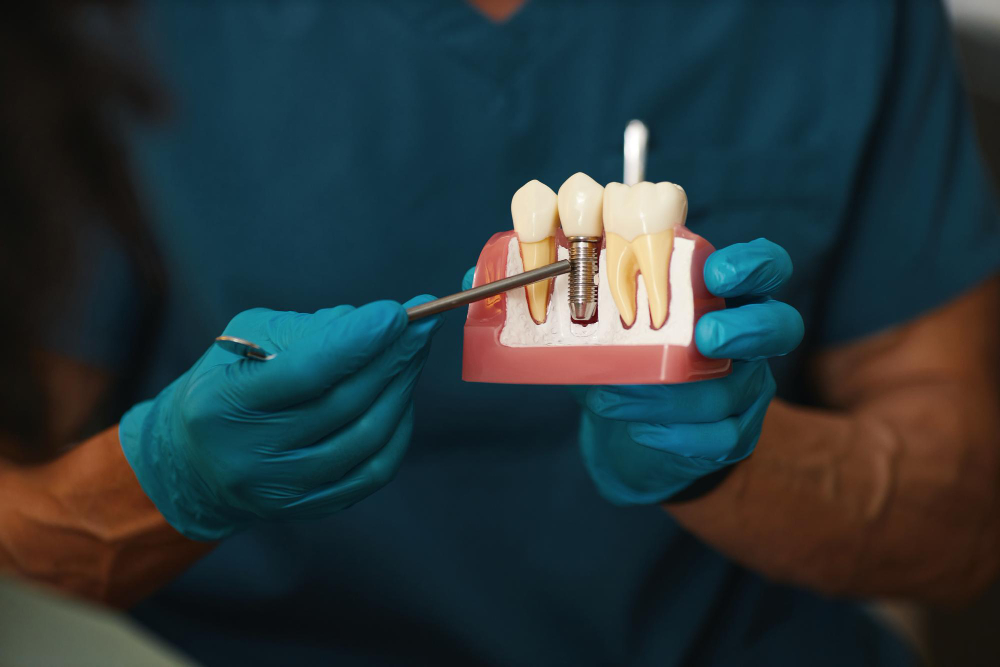
Dental implant costs in Noida vary considerably from one clinic to another. This variation is not necessarily a reflection of overpricing or discounting. A dental implant is not a single product but a combination of a surgical procedure, a titanium implant, an abutment, a custom crown and, in certain cases, preparatory bone treatment.
A quotation may cover all of these components or only some of them. Without understanding what each figure includes, a meaningful comparison between clinics is not possible.
This article explains the factors that determine implant cost, the items frequently excluded from an initial quotation, and the questions patients should ask before proceeding with treatment.
Components of a Dental Implant Treatment
A single tooth implant consists of four distinct elements, each contributing to the total cost.
The implant: A titanium post surgically placed into the jawbone, functioning as an artificial tooth root.
The abutment: A connector that joins the implant to the visible restoration.
The crown: The custom-made prosthetic tooth attached to the abutment.
The surgical and clinical procedure: Diagnostic planning, imaging, placement and follow-up appointments.
Certain clinics quote only the implant component, with the abutment and crown invoiced at a later stage. Others provide a consolidated figure covering the complete treatment. Patients are advised to clarify at the outset whether a quotation represents the implant alone or the full restoration.
Factors That Determine Dental Implant Cost
Implant System and Brand
The implant system selected is generally the most significant cost variable.
Premium systems manufactured in Switzerland, Sweden, the United States and Korea are supported by extensive long-term clinical documentation and established protocols for component availability over many years. Israeli and Indian systems are widely used across the country and perform reliably in routine cases.
The appropriate selection depends on the clinical situation. A posterior tooth in healthy bone may not require the same system as an anterior tooth in compromised bone, where aesthetic predictability is a primary consideration. Patients should, however, be informed which system is being proposed.
Requirement for Bone Grafting
Bone volume is a determining factor in both treatment planning and cost.
When a tooth has been absent for an extended period, the surrounding bone gradually resorbs due to the absence of functional stimulation. Where insufficient bone remains to support an implant, preparatory procedures become necessary.
Bone grafting augments the deficient site and requires a healing period before implant placement. A sinus lift is indicated in the posterior maxilla, where the sinus floor has descended into the available implant space.
Both procedures increase the overall cost and extend the treatment timeline. Neither can be assessed without a CBCT scan, which is why an accurate quotation cannot be provided before radiographic examination.
Crown Material
Zirconia offers high strength and favourable aesthetics, making it the preferred option for anterior restorations. It carries a higher material cost.
Porcelain fused to metal is a well-established option at a lower cost, suitable for posterior teeth, though a metal margin may become visible at the gumline over time.
Metal crowns represent the most economical and durable option, appropriate where aesthetics are not a consideration.
Number of Teeth Being Replaced
Treatment cost does not increase proportionally with the number of missing teeth.
Three adjacent missing teeth do not necessarily require three implants. Two correctly positioned implants can support a three-unit bridge. For a complete arch, four to six implants can support a full fixed prosthesis, which is considerably more economical than individual implants for each tooth.
A treatment plan proposing one implant per missing tooth, without discussion of alternatives, warrants clarification.
Diagnostic Imaging and Treatment Planning
A CBCT scan is standard practice prior to implant placement, providing information on bone volume, bone density and the position of anatomical structures including nerves and sinuses.
Guided implant surgery, in which placement is planned digitally and executed using a fabricated surgical guide, increases accuracy and is of particular value in complex cases and in the aesthetic zone. It represents an additional cost.
Clinical Experience
Treatment performed by a clinician with specialist qualification and substantial implant experience is generally priced differently from treatment performed by a general practitioner undertaking occasional cases. The relevant consideration extends beyond cost to the management of complications should they arise.
Provisional Restoration
Where a temporary tooth is required during the healing period, this is typically a separate cost. Clarification is particularly important for anterior teeth, where remaining without a visible tooth for several months is not practical.
Items Commonly Excluded from Initial Quotations
The following are frequently omitted from an initial figure and subsequently added:
- The crown, where only the implant component was quoted
- The abutment
- CBCT scan and diagnostic records
- Extraction of the existing tooth
- Bone grafting or sinus lift procedures
- Provisional restoration during healing
- Follow-up appointments
Patients are advised to request written confirmation of inclusions and exclusions prior to commencing treatment.
Beyond the price tag: How to choose the Right Dental Implant
Implant treatment offered substantially below prevailing rates generally involves one or more of the following: an unbranded implant system without long-term clinical documentation, a crown quoted separately, treatment by a general practitioner rather than a specialist, absence of CBCT planning, or follow-up appointments charged separately.
The principal concern with unbranded systems relates to component availability. Should a crown require replacement after several years, or a component fail, matching parts must remain obtainable. Established manufacturers maintain component compatibility over extended periods. Generic systems frequently do not, which may necessitate removal and replacement of the entire implant.
The cost of removing and replacing a failed implant exceeds that of appropriate initial treatment, and bone condition is typically compromised by that stage.
Comparison With Alternative Treatments
| Consideration | Dental Implant | Fixed Bridge | Removable Denture |
|---|---|---|---|
| Effect on adjacent teeth | None | Two healthy teeth require preparation | None |
| Bone preservation | Maintains bone through functional loading | Bone resorption continues at the site | Bone resorption continues |
| Expected lifespan | Decades with appropriate maintenance | Typically 10 to 15 years | Requires periodic relining or replacement |
| Initial cost | Highest | Moderate | Lowest |
| Function | Comparable to a natural tooth | Fixed and stable | Removable, with possible movement during function |
A fixed bridge involves a lower initial cost but requires preparation of two healthy adjacent teeth and does not prevent bone resorption at the edentulous site. Over an extended period, the cost difference between the two options reduces considerably.
Payment Arrangements
Implant treatment is generally completed over several months, and payment is commonly structured in stages corresponding to treatment phases. EMI facilities are available at most clinics providing implant treatment.
Where cost is a constraint, this should be raised during consultation. Alternative implant systems, crown materials or treatment approaches using fewer implants may be clinically appropriate.
Dental Implant Treatment in Sector 35, Noida
Multispeciality Family Dental Care is located on Golf Course Road, Sector 35, Noida, opposite Metro Pillar 223 and adjacent to Bharat Petroleum. The clinic is accessible to patients across Sectors 33, 34, 36, 37, 39, 50, 51, 52 and surrounding areas of Noida. The nearest metro stations are Sector 34, Sector 52 and Noida City Centre.
Implant treatment is undertaken by Dr. Mradul Gupta, BDS, MDS in Prosthodontics and Implantology, with over 14 years of clinical experience.
The implant consultation comprises clinical examination, CBCT imaging where indicated, and a written treatment plan specifying the implant system proposed, any preparatory procedures required, crown material, number of appointments and complete treatment cost.
Appointments may be scheduled by calling 9310531320 or visiting the clinic.
Frequently Asked Questions
Common questions and expert clinical answers by Dr. Mradul Gupta.
Dr. Mradul Gupta
BDS, MDS - Chief Dental Surgeon & ImplantologistDr. Mradul Gupta is an acclaimed dental surgeon in Noida with over 15+ years of clinical excellence in dental implants, painless root canals, cosmetic smile designing, and comprehensive family dental healthcare.
More Dental Care Guides
View All GuidesNeed Expert Dental Advice or Treatment in Noida?
Experience gentle, state-of-the-art dental care with Dr. Mradul Gupta at Multispeciality Family Dental Care. Book your visit or talk to our clinic team today.